
SEO TOOLKIT · PRACTICAL CHECK
Google Bot Search Engine Spider Simulator
Review the HTML signals a basic search crawler can read from one public page.
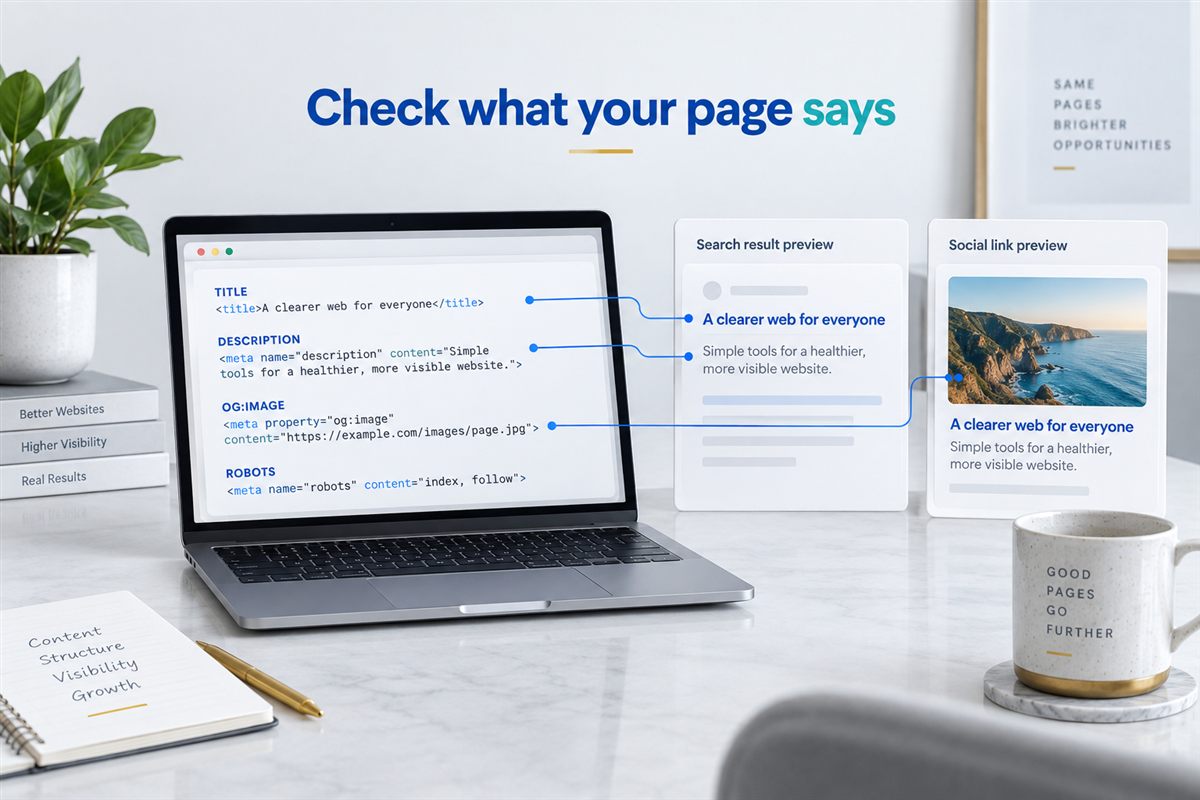
Use the result to choose the next useful fix.
Himanshu’s approach is straightforward: understand what the tool shows, then connect it to the page, customer journey and search opportunity in front of you.
See the signals available in the initial HTML
This tool extracts selected metadata, headings, links and readable text from the server response. It is useful for investigation, but it does not impersonate Googlebot or reproduce Google’s rendering and indexing systems.
Search crawler questions
Is this exactly what Googlebot sees?
No. It is a bounded inspection of the initial HTML response. Google may render JavaScript, apply different crawl policies and process information through systems this tool cannot reproduce.
Why might important content be missing?
Content created only after JavaScript runs may not appear in the initial HTML. That is a useful rendering clue, not proof that Google cannot process the page.
Does this test robots.txt?
No. Review robots.txt, page-level robots directives and access controls separately when diagnosing crawlability.
Does a visible link guarantee discovery or indexing?
No. Links support discovery and context, while crawling and indexing still depend on access, directives, canonicalisation, quality and search-engine decisions.
Should I expose every piece of page text?
Expose the meaningful primary content and navigation needed by visitors. Avoid adding hidden or repetitive text purely for crawlers.