
Google Maps Visibility / Practical guide
Google Maps Visibility: What to Check Before Chasing Rankings
A useful local search review connects the listing with the real business, its website and the customers it can serve. It does not start with manufactured clicks.
Real service and profile category
Website, reviews and useful details
Calls, bookings and qualified enquiries
What the evidence does and does not establish
Correction to the earlier article: the old headline presented click-through rate as a confirmed Google Maps ranking factor. That conclusion should not be treated as established guidance. A historic forum exchange is not sufficient evidence for a ranking tactic, and I do not recommend manufactured clicks.
Google’s local ranking guidance describes relevance, distance and prominence or popularity. It also recommends accurate business information and discusses reviews. It does not provide a formula that turns a click target into a predictable position.
That distinction matters when choosing work. You can improve how accurately a profile represents a business and how easily a customer assesses it. You should not build a plan around an unsupported promise that a certain number of interactions will produce a top-three result.
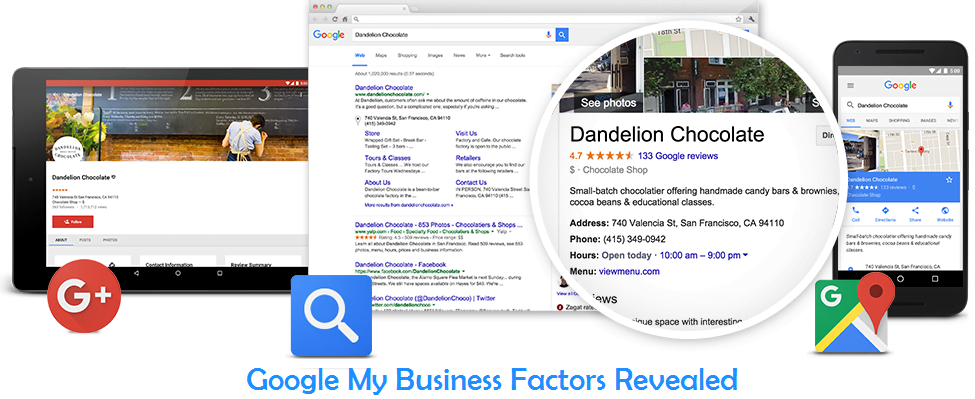
Check the listing against the real business
I first compare the profile with the business’s actual operation. The right category, real name, contact route and opening hours are more useful than an impressive-looking completeness score with incorrect details underneath.
- Confirm the business controls the profile and the appropriate people have access.
- Check the name reflects the real business, not a string of added search terms.
- Choose categories that describe what the business actually does.
- Review the address or service-area setup against the operating model.
- Check normal and special hours, phone, website and booking destinations.
- Look for duplicates or conflicting information before creating another listing.
Eligibility and representation rules matter. A service-area business should not invent a staffed customer-facing office to appear in another neighbourhood. Google’s business representation guidelines are the reference when the model is unclear.
My Google Business Profile and Maps service covers the listing alongside its supporting website. Access and ownership should remain with your business.
Give the profile a useful destination
A profile link should take the customer to a page that helps them act. For one location, that may be the main service or location page. For a multi-location business, each genuine branch needs clear details rather than sending every visitor to a generic homepage with no branch information.
Check services, directions where useful, contact details, availability and the next step. If the profile advertises a service that is difficult to find on the website, the customer has to resolve that mismatch themselves.
Do not produce near-identical pages for every surrounding suburb just to insert place names. A worthwhile page needs a real reason to exist: a genuine location, distinct service arrangements or information that helps that audience. The local SEO approach should reflect how the business serves customers, not how many place names fit into a spreadsheet.
Make independent information consistent and useful
Compare important directory and platform records with the current business details. Prioritise sources customers actually encounter, established sector directories and major map platforms. A large submission count is not a substitute for accurate records.
For a business that has moved or changed phone numbers, old information can create wasted journeys and missed enquiries. Keep a record of what was corrected and what still requires platform support. Citation management is useful when that clean-up extends beyond a single profile.
Ask customers for honest reviews through an appropriate process. Do not buy reviews, offer rewards for positive ratings or filter requests so only happy customers are invited. Google’s Maps contribution policy covers fake engagement. Replies should address the customer’s point without exposing private information.
Measure a local market, not one screenshot
Record the service query, search location and date when checking visibility. A business may be strong near its premises and less visible farther away. Treat that pattern as evidence to interpret, not a reason to assume the listing is broken.
| Signal | What it helps answer | What it does not prove |
|---|---|---|
| Visibility by query and area | Where relevant customers may find you | A single permanent rank |
| Profile website activity | Whether visitors move towards your site | That those visits became customers |
| Calls and booking activity | Whether the listing prompts action | That every action is qualified or completed |
| Confirmed enquiries and sales | Whether the business gained useful outcomes | That Maps was the only influence |
Use consistent campaign tagging where appropriate and compare website data with the business’s own enquiry records. Check definitions in Business Profile performance reporting before interpreting a metric as a completed customer outcome.
If visits arrive but enquiries do not, the conversion diagnosis checklist helps investigate what happens after discovery.
Make local facts clear for AI-assisted discovery too
A longer question might ask for a venue with a particular service, location or accessibility need. Clear service descriptions and practical details give people more to evaluate than a page that only repeats a city keyword.
I would treat accurate listings, useful website information and verifiable evidence as a shared foundation, not promise that one profile change will produce an AI citation. Different assistants use different sources and their results can change. For Google Search’s own AI features, its published guidance still points to established SEO foundations.
Start with the information your actual customers ask for. Keep that information current across the website and important profiles. It is useful whether the customer arrives through Maps, an ordinary search result or an AI-assisted journey.
For the wider relationship between your website, local information and Google’s AI experiences, see Gemini and Google AI Search consultancy.
Common questions
Does a higher click-through rate guarantee a better Maps position?
No. The earlier headline overstated the evidence. I would not recommend buying or manufacturing clicks. The work should focus on an accurate profile, relevant website support and genuine customer evidence.
Can I rank across a whole city from one location?
Visibility can vary across the city and by query. I would review the actual service coverage and search patterns, then identify realistic opportunities rather than promise one position everywhere.
Should I create a new profile for each service area?
Not simply to target an area. Review eligibility and the actual business setup first. Unnecessary profiles can introduce duplicates and representation problems.