
On-page SEO / Practical guide
Title Tag Optimisation: Write Titles That Match the Page
My approach to writing clear page titles, correcting template mistakes and measuring changes without chasing a character-count score.
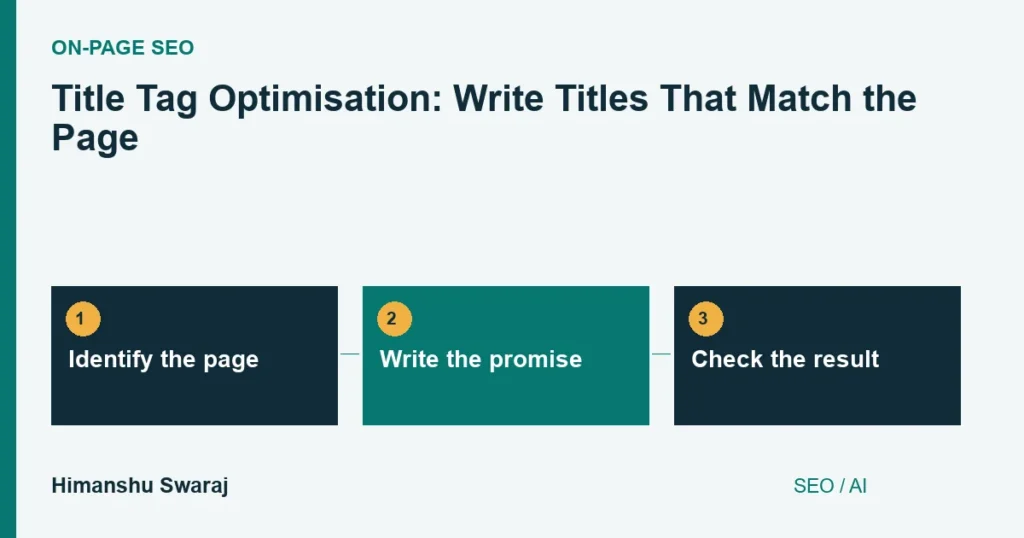
Start with the page, not the keyword field
When I review a website, I do not start by rewriting every title in the SEO plugin. I first ask what each page is supposed to do. A product page, a comparison guide and a service page can mention the same subject while answering very different questions. Their titles should make those differences clear.
For a consultancy website like mine, the home page can introduce the person and overall expertise. A consultancy page should explain the advisory offer. An article should promise an answer. Giving all three the same list of expert, freelancer and consultant terms makes them harder to distinguish.
Build a small worksheet with the URL, page purpose, main audience, existing title and proposed title. Read the actual page before filling in the last column. If the intended promise is missing from the content, the work extends beyond metadata.
Three title rewrites and why I would make them
| Page | Weak title | Clearer example |
|---|---|---|
| Product category | Buy Shoes Online | Best Shoes | Waterproof Walking Shoes for Women | Brand |
| Advisory service | SEO Expert Freelancer Agency Best SEO | SEO Strategy Consulting for In-house Teams | Brand |
| Help article | Google Problems Explained | Product Pages Not Indexed? Checks to Make First |
These are writing examples, not measured ranking improvements. The category example only works if the products really are waterproof walking shoes. The advisory example requires an offer that supports in-house teams. Specificity earns its place through the page, not through an attractive phrase.
I avoid inventing free delivery, a local office, a review score or a current year just to make a title more clickable. When an offer changes, the title and the on-page explanation need to change together.
Use length as an editing check, not a ranking formula
A preview tool helps spot unwieldy wording, but a green indicator is not evidence of relevance. I put the subject and useful distinction before optional branding. Then I remove repetition and read the result as a sentence fragment a customer could understand at a glance.
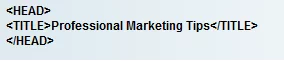
Keep one meaningful title element in the document head. Check that the theme and SEO plugin are not adding duplicate brand names. Product variants, pagination and multilingual templates deserve individual checks: an otherwise good formula can repeat the wrong size, language or category across hundreds of pages.
Google may display a different title link using other page signals. Its title-link guidance explains this. I investigate a mismatch by comparing the title with the visible heading and page content, rather than repeatedly changing punctuation.
Make the change in a controlled group
- Choose a group with the same purpose, such as ten important category pages.
- Record the original titles and the date of the change.
- Check rendered pages and source HTML after publishing.
- Confirm that the titles describe the correct products, market and offer.
- Review Search Console queries, impressions and clicks after recrawling, alongside business outcomes.
Compare similar periods and account for position changes, seasonality and a different query mix. A higher click-through rate does not establish that the title alone caused it. Nor does a short period without movement prove the change failed. I want an understandable record of what changed before recommending the next round.
Where AI helps, and where I still make the decision
I can use AI to draft alternatives from a verified page brief or flag repeated titles in a crawl export. I review every selected version against the live offer. Tools can easily turn an ordinary product into an unsupported superlative or confuse a service area with a physical branch.
A clear title also gives a reader arriving from AI search an accurate expectation. It is not a special instruction that secures a citation. Keep the explanation, evidence and authorship on the page; do not hide the answer behind a clever headline. My AI citations and source visibility work looks at that wider evidence.
For related checks, read my metadata guide and navigation audit. When the issue spans page roles and competing offers, I address it through SEO strategy consulting.
Common questions
Should every title be under 60 characters?
I use previews to improve readability, not a fixed character count as a ranking rule. Keep the important distinction early and remove unnecessary words.
Can I use the same title and H1?
Yes, where both accurately describe the page. They do not need to be artificially different. The H1 can be more conversational if the meaning stays consistent.
Should I change all product titles with AI?
I would test the template on representative products first, including variants and missing attributes. A bad rule applied to the whole catalogue can create much more work than it saves.